From Local Realities to
Institutional Action
How CDP connects people, evidence and institutions to turn community priorities into coordinated action, stronger institutions and lasting public benefits.
Our Institutional Contribution Pathway
How our work turns local priorities into institutional change and public benefit.
Local Realities &
Institutional Challenges
Evidence &
Shared Understanding
Systems Integration &
Collaborative Soft Infrastructure (· Rules · Agreements · Processes · Knowledge · Relationships)
Collective Capability &
Coordinated Action
Institutional Performance &
Public Benefits
Selected Work of Practice
Examples of how CDP's work has strengthened institutions, advanced inclusion and supported more resilient development.

CLIMATE JUSTICE
Connecting Local Climate Priorities with Public Planning
Challenge
Community priorities often do not enter public planning and budgeting.
CDP's contribution
Facilitated participatory planning and linked priorities with Union Parishad processes.
Documented progress
8 climate adaptation priorities integrated into the Annual Development Plans of 4 Union Parishads.
Evidence gap
Budget allocation, implementation and measurable climate-protection outcomes.
INCLUSIVE DEVELOPMENT
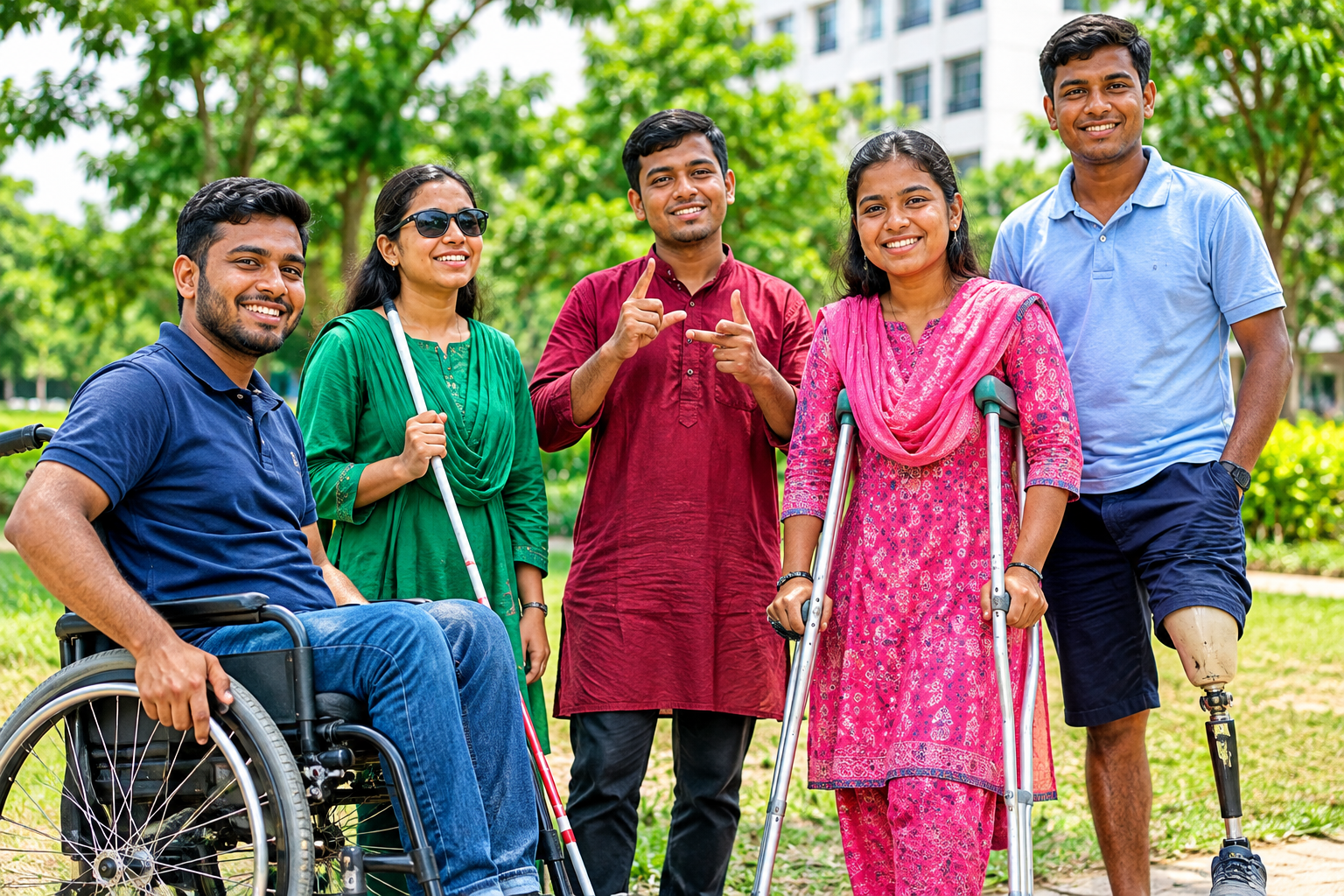
Strengthening Disability-Inclusive Climate Governance
Challenge
Disability inclusion often remains project-based and not part of regular governance processes.
CDP's contribution
Established multi-actor partnership arrangements with local government and community organizations.
Documented progress
Formal Memorandums of Understanding (MoUs) executed in January 2026.
Evidence gap
Operationalization, fulfilment of responsibilities and improved accessibility or protection outcomes.

CLIMATE JUSTICE & ACCOUNTABLE GOVERNANCE
Community-Led Drainage and Safe Access
Challenge
Damaged drainage and unsafe access increased waterlogging and health risks for ~130 households.
CDP's contribution
Worked with the Lalmatia Women Climate Club on an emergency rehabilitation initiative.
Documented progress
A drainage and access corridor of ~419 feet rehabilitated, serving ~130 households.
Evidence gap
Long-term maintenance, drainage performance and health and safety outcomes.

CLIMATE JUSTICE
Advancing Community-Led Adaptation Planning
Challenge
Communities often have limited influence over adaptation priorities and implementation.
CDP's contribution
Developed and applied the People's Climate Change Adaptation Action Plan (PCAP) through participatory planning.
Documented progress
4,800 extremely poor households organized into 240 groups (50% women) across 10 districts.
Evidence gap
Long-term institutional adoption, continuity and adaptation outcomes.
How We Assess Institutional Contribution
We distinguish four levels of evidence to assess change beyond activities.
Institutional Assets Produced
Plans, agreements, guidelines, knowledge products, processes and platforms.
Institutionalization
Whether responsible institutions adopt, use, maintain and adapt those arrangements.
Institutional Performance
Improvements in coordination, responsiveness, accountability or service delivery.
Public Benefits
Improved protection, inclusion, resilience or other sustained outcomes for people.
Explore More of Our Work
Learn more about our programmes, projects, evidence and learning.